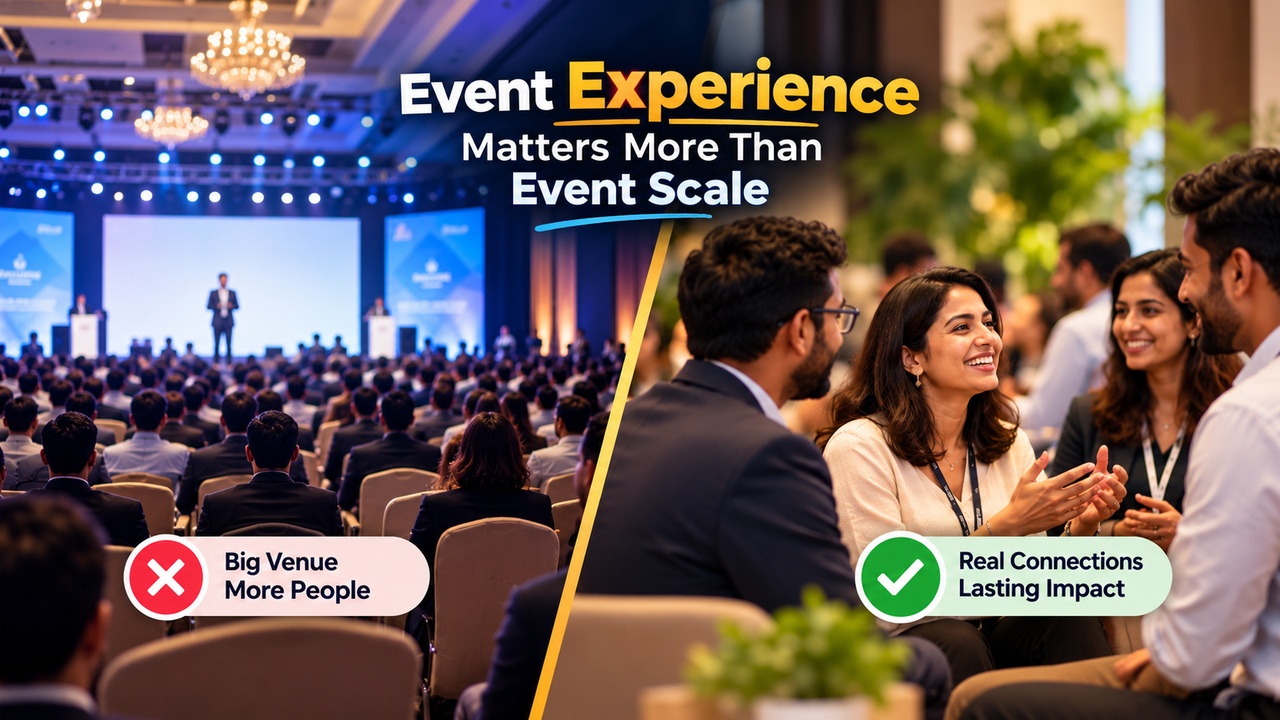

Corporate events are no longer just gatherings. Whether it’s an annual day celebration, dealer meet, leadership summit, product launch, employee engagement activity, or industry conference, every event directly influences brand perception, employee morale, stakeholder relationships, and business growth.
The challenge is that not all event management companies are built for large-scale corporate execution. Selecting the wrong partner can lead to budget overruns, technical failures, poor attendee experiences, and missed business objectives.
This guide will help HR teams, marketing leaders, procurement departments, and business decision-makers identify the qualities that truly matter when choosing a corporate event management company in India.
What Makes Corporate Event Management Different?
Corporate events require a combination of:
- Strategic planning
- Brand alignment
- Technical expertise
- Vendor coordination
- Production management
- Audience engagement
- Risk management
Unlike social events, corporate programs often involve multiple stakeholders, senior leadership participation, media visibility, and measurable business outcomes.
1. Evaluate Industry Experience
One of the first factors to consider is experience. Look for an event partner that has successfully executed: Annual Days Dealer Meets Leadership Conferences Product Launches Employee Engagement Events MICE Programs Corporate Family Days A company with diverse experience can adapt to different event formats and audience expectations.
Ask:
How many years have they been operating?
What industries have they served?
Can they provide real event case studies?
2. Review Their Event Portfolio
A strong portfolio reveals much more than promotional claims.
Check:
- Event scale
- Production quality
- Stage design
- Audio visual setup
- Audience engagement
- Branding execution
Video showcases often provide a better understanding of actual event capabilities than static images.
3. Assess Production & Technical Capabilities
The success of a corporate event often depends on flawless execution behind the scenes.
Important areas include:
- LED walls
- Stage production
- Sound engineering
- Lighting design
- Livestream management
- Hybrid event technology
- Event registration systems
Technical failures can impact the attendee experience and brand reputation.
4. Verify Pan India Execution Capability
Many companies can execute events in one city but struggle with multi-location projects.
If your organization operates nationally, verify:
- Vendor network
- On-ground coordination teams
- Logistics capabilities
- Multi-city event experience
A strong nationwide execution framework helps maintain quality standards across locations.
5. Understand Their Event Planning Process
Professional event companies follow a structured workflow:
Discovery & Requirement Gathering
Understanding objectives, audience profiles, budgets, and expectations.
Creative Planning
Developing concepts, themes, and engagement strategies.
Production & Coordination
Managing vendors, venues, technology, and logistics.
Event Execution
Real-time monitoring and issue resolution.
Post Event Reporting
Performance analysis and event insights.
6. Evaluate Team Strength
Behind every successful event is an experienced team.
Look for:
- Event strategists
- Creative designers
- Production specialists
- Project managers
- Technical coordinators
- Vendor management experts
A dedicated team significantly improves planning efficiency and execution quality.
7. Focus on Event ROI, Not Just Cost
The cheapest proposal is rarely the best option.
Consider:
- Attendee experience
- Brand impact
- Employee engagement
- Lead generation
- Stakeholder satisfaction
A well-executed event creates measurable value that often exceeds its initial investment.
Questions to Ask Before Hiring an Event Management Company
Before finalizing a partner, ask:
- Have you managed events similar to ours?
- Can you share client references?
- What contingency plans do you have?
- How do you manage production and logistics?
- Can you handle events across multiple cities?
- What reporting will be provided after the event?
These questions help reduce risks and improve decision-making.
Why Corporate Event Planning Requires the Right Partner?
Modern corporate events are becoming increasingly sophisticated.
Organizations expect:
- Better attendee engagement
- Stronger brand experiences
- Seamless technology integration
- Flawless execution
- Measurable business outcomes
Working with an experienced corporate event management company ensures these objectives are achieved without unnecessary stress on internal teams.
Conclusion
Choosing the right corporate event management company is one of the most important decisions in the event planning process.
The ideal partner combines creativity, technical expertise, production excellence, strategic thinking, and execution capability. By evaluating experience, portfolio quality, team strength, and operational processes, organizations can significantly improve the success of their events.
Whether you’re planning an annual day celebration, leadership conference, dealer meet, product launch, or employee engagement program, selecting the right event partner lays the foundation for a memorable and impactful experience.
Planning a Corporate Event?
Industry Resources & References
For readers who want to explore global event management standards, industry best practices, and professional event planning resources, the following organizations provide valuable insights:
Event Industry Council (EIC) – A globally recognized organization that develops standards, research, and professional certifications for the events industry.
Meeting Professionals International (MPI) – One of the world’s largest event and meeting industry associations, offering educational resources, industry trends, and professional development opportunities.
These resources can help businesses better understand event planning frameworks, attendee engagement strategies, and emerging trends in corporate events.