A few years ago, a company we know hosted a large annual event. The venue was impressive. The budget was generous. Hundreds of people attended.
A month later, almost nobody could say what the event was about.
This happens more often than most teams admit. Companies plan events around headcount and spend because those numbers are easy to report. Attendees, however, remember something else entirely: how the event made them feel.
In this article, we look at why event experience matters more than event scale, where corporate event planning tends to go wrong, and how to plan events that people actually remember.
What Is the Difference Between Event Scale and Event Experience?
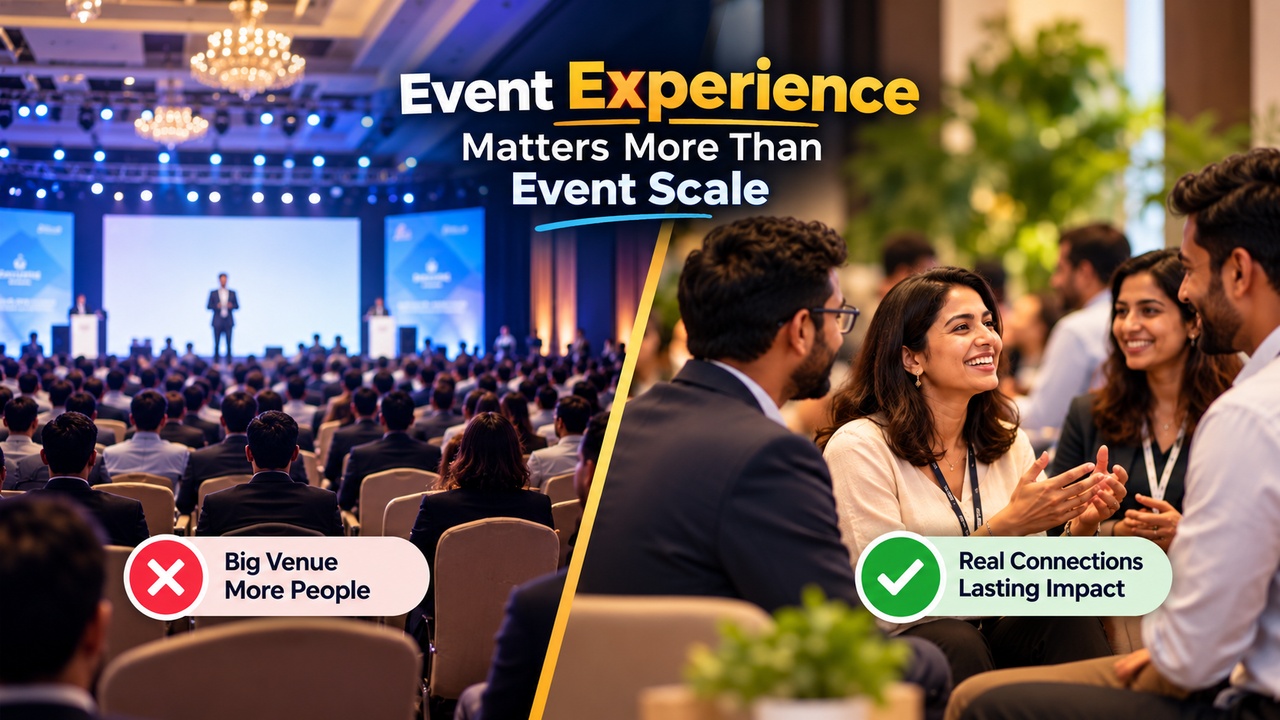
Event scale is everything you can count. Number of attendees, size of the venue, number of sessions, size of the budget, number of speakers.
Event experience is everything attendees take home with them. The conversations they had, the moment that surprised them, what they learned, and whether they felt welcome and valued.
Scale is visible to the planning team. Experience is visible to the attendee. That is why the two are often confused, and why many events look successful on paper but fail to leave a lasting impression.
Why Do Companies Focus on Scale?
There are practical reasons for this, and they are worth understanding before we criticise them.
Scale is easy to measure
Registration numbers, footfall and spend fit neatly into a report. A feeling of connection does not. When leadership asks how the event went, “we hosted 500 people” is a simpler answer than “people left feeling more connected to the brand.”
Scale feels like proof of effort
A large event looks impressive from the outside. For HR teams, marketing teams and admin teams working under pressure, a big turnout can feel like validation of months of work.
Budgets are often approved by headcount
Procurement and finance teams usually evaluate events through cost per head. That is a reasonable starting point, but it quietly pushes planning towards more people instead of better outcomes.
None of this is wrong. The problem begins when scale becomes the only measure of success.
What Goes Wrong When Scale Comes First
When the goal is a big event, a few predictable problems show up.
• Sessions get padded. To fill a larger schedule, teams add speakers and activities that don’t serve the event’s purpose.
• Attendees become an audience. In a large room, people watch. They rarely participate or talk to each other.
• The message gets diluted. With too many agenda items, no single idea stands out.
• Follow-up gets forgotten. Teams spend most of their energy on the event day and very little on what happens after.
The result is an event that is well attended and quickly forgotten.
Why Event Experience Matters More
People don’t remember schedules. They remember moments.
A well-designed event experience does three things that scale alone cannot.
It creates real connection
Whether the event is an employee offsite, a client meeting, or a product launch, the lasting value usually comes from the conversations people have. Smaller formats and thoughtful design give those conversations room to happen.
It makes the message stick
When an event is built around one clear idea, attendees leave knowing what it was about. That matters for internal events, where you want people aligned, and for external events, where you want them to remember your brand.
It supports the outcomes you actually care about
For HR teams, that might be engagement and retention. For marketing teams, it might be leads, brand recall or advocacy. For admin and procurement teams, it is value for money. In every case, a memorable event delivers more per rupee than a forgettable one.
How to Plan Events That People Remember
Here is the approach we recommend to event teams and brands.
1. Design one moment people will retell
Every memorable event has at least one moment attendees talk about afterwards. It could be a surprise, a personal story, an unexpected guest or a genuine conversation between people who would not normally meet.
Plan this moment on purpose. Ask yourself: if an attendee describes this event to a colleague next week, what will they say?
2. Cut the filler
Review your agenda session by session. Every speaker, panel and activity should earn its place by supporting the event’s core purpose.
If a session exists only to fill time, remove it. A shorter, tighter event almost always feels better than a long one with weak stretches.
3. Design for participation, not just attendance
Give people reasons to interact. Smaller breakout groups, structured networking, live Q&A and hands-on activities all help attendees move from watching to taking part.
4. Ask attendees one question afterwards
Send a short follow-up with a single question: “What do you remember?”
Their answers show you what worked far better than a satisfaction score. If most people mention the same moment, you know what to repeat. If no one mentions your keynote, that tells you something too.
5. Plan the follow-up before the event
The event does not end when the doors close. Decide in advance how you will keep the conversation going through a recap, shared resources, a thank-you note or a next step for attendees.
How to Measure Event Success Beyond Headcount
If you are reporting on event ROI, add experience-based measures alongside the numbers you already track.
• Recall: What do attendees remember a few weeks later?
• Engagement: How many people participated in discussions, activities or Q&A?
• Connection: Did attendees meet someone new or have a meaningful conversation?
• Action: Did people take the next step you hoped for, such as booking a call, joining a programme or sharing feedback?
• Advocacy: Are attendees talking about the event with others?
These measures take a little more effort to collect, but they tell a more honest story than attendance figures.
A Note for Budget Approvers
If you review or approve event budgets, whether in HR, marketing, admin or procurement, one change can make a real difference.
Before asking how many people are coming, ask what the experience will be.
What will attendees do? What will they feel? What is the one thing they should remember? A clear answer to those questions is a better sign of a good event than a large guest list.
Does This Mean Big Events Are Bad?
No. Large events can be powerful, and some situations call for scale, such as industry conferences, public launches and brand activations.
The point is that scale should serve the experience, not replace it. A large event with a clear purpose, a strong central moment and room for real interaction can be excellent. A large event built mainly to look big usually is not.
Frequently Asked Questions
What is event experience?
Event experience is the overall impression attendees take away from an event. It includes the atmosphere, the conversations, the content, the surprises and how welcome and engaged people felt from start to finish.
Is a smaller event better than a larger one?
Not always. Smaller events make it easier to create connection and participation, but a large event can work well if it is designed around a clear purpose and a memorable experience. The right size depends on your goals.
How do you measure the success of a corporate event?
Track attendance and cost, but also measure recall, engagement, connection, follow-up action and advocacy. A short post-event question such as “What do you remember?” is a simple place to start.
How can HR teams use event experience to improve engagement?
HR teams can design employee events around participation and connection instead of long presentations. Smaller groups, shared activities and real conversations tend to build stronger engagement than large, passive gatherings.
How can marketing teams make events more memorable?
Build the event around one clear idea and one standout moment. Remove sessions that don’t support that idea, and plan follow-up content so the event continues to work after the day itself.
Final Thoughts
A large venue and a large crowd will get attention in the planning stage. A strong experience is what earns attention afterwards.
The next time you plan an event, start with the experience you want people to remember, then build the scale around it.
At RaRi Softworks, we work with event teams and brands to plan and promote events that people talk about long after they end. If you are planning your next event and want to make it memorable, get in touch with our team.
What is the one event you still remember years later, and what made it stick? Share it in the comments or reach out to us. We would love to hear it.